短報 · 資料
東アジアの文字・言語政策
一般的な解説には、戦後の日本が文字表記を簡素化し、韓国がハングルに移行し、中国が漢字を簡化したと書かれています。しかし、それを定めた文書、その日付、発出機関、具体的な変更内容まで示すものはほとんどありません。この年表には、文書で確認できた項目が20件、報道などによる情報のみの項目が0件、未解決の主張が1件あります。記録された日付は1443から2013までにわたり、各項目の出典確認状況も示しています。
訂正(2026年10月18日)。1977年の第二次漢字簡化方案と1986年の撤回について、出典をWikipediaから当時の草案および国務院通知「国発〔1986〕64号」に変更しました。根拠のない1977年12月21日の施行日を削除し、1978年4月と7月の試用停止を明確にしたほか、文書で確認できた項目、報道などのみで伝えられる項目、未解決の項目を別々に集計しました。
資料を詳しく見る
5つの国、受け継がれた1つの文字体系、それをめぐる600年近くの議論
ここで扱う各法域は、いずれも漢字を受け継ぎましたが、その後の道筋は異なりました。2つの法域では、同じ漢字でも字形が一致しなくなり、1つでは漢字の使用が完全になくなり、さらに1つでは30年かけて漢字を学校から排除した後、一部を復活させました。どこからでも読み始められます。
文字・言語政策 / 年表
伝承ではなく、公的文書を読む
日付のある記録をたどります。ここに掲載した文書が現在も有効とは限りません。
2013年まで:21件の記録、5法域。
China
-
汉字简化方案 出典で確認済み
以下の文書の説明・影響・出典名は英語です。
Scheme for Simplifying Chinese Characters
発行機関: 国务院 / State Council of the PRC
記録の日付の種類: passed · 別途定められた施行日: 1956-02-01
記録された効果: Passed at the State Council’s 23rd plenary session. Table 1 — 230 characters — became mandatory in printed matter from 1 February 1956. Table 2, of 285 characters, and a table of 54 simplified radicals were issued for trial. The resolution directs that traditional forms “should stop being used in printed matter”, excepting reprints of classical texts.
出典上の留意点 / 通説: The figure of 1,055 variant characters abolished is often attached to this scheme. It belongs to a different instrument — the First Table of Variant Characters, December 1955 — and is not folded in here.
中华人民共和国教育部 (Ministry of Education, PRC): 国务院关于公布汉字简化方案的决议(1956年) ↗ primary · Full text of the resolution
Wikisource: 汉字简化方案 ↗ official-secondary · Resolution and table text
年表の全文を読む ↗ -
汉语拼音方案 出典で確認済み
以下の文書の説明・影響・出典名は英語です。
Scheme for the Chinese Phonetic Alphabet
発行機関: 全国人民代表大会 / National People’s Congress
記録の日付の種類: approved
記録された効果: Approved at the fifth session of the first National People’s Congress. The resolution adopts Pinyin “as a tool for helping people learn Chinese characters and promote Putonghua”, directs that it be taught first in teacher-training and in primary and secondary schools, and that it be extended gradually into publishing.
出典上の留意点 / 通説: Pinyin is widely said to have been intended to replace Chinese characters. The 1958 resolution does not say that — it adopts Pinyin as an auxiliary tool. Zhou Enlai’s separate report of 10 January 1958 states explicitly that Pinyin “is not a phonetic script meant to replace Chinese characters”, but that is his report, which the resolution approves only in principle, and not the enacting text. A long-range romanisation current did exist within the script-reform committee; it is not what this instrument enacts, and the popular claim is misattributed rather than invented. The NPC’s own hosting of the resolution could not be retrieved — the connection fails at the TLS handshake — so the wording rests on convergent reproductions.
中国人大网 (National People’s Congress): 第一届全国人民代表大会第五次会议关于汉语拼音方案的决议 ↗ primary · Full resolution — located, not retrievable (TLS handshake failure)
中国新闻网: 与汉语拼音相伴60年:从国家规范到国际标准 ↗ reported · Resolution text quoted
年表の全文を読む ↗ -
简化字总表 出典で確認済み
以下の文書の説明・影響・出典名は英語です。
Complete List of Simplified Characters
発行機関: 中国文字改革委员会 / Committee for Reforming the Chinese Written Language
記録の日付の種類: published
記録された効果: Consolidated the 1956 scheme into three tables: 352 characters not used as components, 132 usable as components together with 14 simplified radicals, and 1,754 derived by analogy from those components. Not a State Council instrument — a publication of the script-reform agency, which is why its legal weight differs from the 1956 resolution it consolidates.
出典上の留意点 / 通説: The component figures sum to 2,238. Secondary sources almost universally give 2,236, explained as two characters double-listed — but the table’s own footnote already states its 1,754 figure is deduplicated, and the pair invoked to reach 2,236 is not the pair that footnote describes. The 1964 gazette is not online. No winner is picked here.
Wikisource: 简化字总表(1964年版) ↗ official-secondary · Tables 1–3 and the count footnote
年表の全文を読む ↗ -
第二次汉字简化方案(草案) 出典で確認済み
以下の文書の説明・影響・出典名は英語です。
Second Scheme for Simplifying Chinese Characters (Draft)
発行機関: 中国文字改革委员会 / Committee for Reforming the Chinese Written Language
記録の日付の種類: published
記録された効果: The draft appeared in the People’s Daily on 20 December 1977. Table 1 listed 248 simplified forms, including 55 derived by analogy, for trial use in publications. Table 2 listed 605 for public discussion. Education authorities stopped trial use in textbooks in April 1978; the propaganda department stopped trial use in newspapers, books and periodicals in July. State Council notice Guofa [1986] No. 64, dated 24 June 1986, formally withdrew the draft.
出典上の留意点 / 通説: The first table was authorized for trial in publications. Neither table was a definitive replacement for the existing official character list. The record is documented by a contemporaneous draft and a later State Council notice.
国务院 (State Council; Beijing government archive): 国发〔1986〕64号:废止《第二次汉字简化方案(草案)》 ↗ primary · 1977 publication, 1978 trial-use withdrawals, 1986-06-24 rescission
人民日报 (digitized transcript hosted by CN Gov Open Data): 第二次汉字简化方案(草案), 1977-12-20 ↗ official-secondary · Original draft text, table definitions and counts: 248 and 605
年表の全文を読む ↗ -
国务院批转国家语言文字工作委员会关于废止《第二次汉字简化方案(草案)》的通知 出典で確認済み
以下の文書の説明・影響・出典名は英語です。
State Council notice transmitting the request to abolish the Second Scheme (Draft)
発行機関: 国务院 / State Council of the PRC
記録の日付の種類: promulgated
記録された効果: Ended use of the 1977 draft from the date of the notice, nine years after it was issued and eight after it stopped being used in practice. The Complete List of Simplified Characters was reissued in a new edition dated 10 October 1986, un-merging four characters — 叠, 覆, 像, 囉 — that had been treated as variant equivalents, taking Table 1 from 352 to 350 and the analogy table from 1,754 to 1,753.
出典上の留意点 / 通説: The revised components sum to 2,235. Secondary sources repeat “2,274 characters and 14 radicals”, which does not reconcile with the table’s own stated components under any combination. 2,235 is the figure that adds up; the origin of 2,274 could not be traced, so it is reported rather than dismissed.
Wikisource: 简化字总表(1986年版) ↗ official-secondary · Header dated 1986-10-10; footnote on the four un-merged characters
国务院 (State Council; Beijing government archive): 国发〔1986〕64号:废止《第二次汉字简化方案(草案)》 ↗ primary · State Council notice number and issue date, 1986-06-24
年表の全文を読む ↗ -
通用规范汉字表 出典で確認済み
以下の文書の説明・影響・出典名は英語です。
Table of General Standard Chinese Characters
発行機関: 国务院 / State Council of the PRC
記録の日付の種類: approved · 別途定められた施行日: 2013-08-19
記録された効果: 8,105 characters in three levels: 3,500 for general literacy, a further 3,000 by frequency, and 1,605 covering surnames, place names, scientific terms and classical characters used in textbooks. The notice directs that general usage follow this table and that previously relevant tables cease to be used. Released publicly on 19 August 2013. It is the instrument currently in force.
出典上の留意点 / 通説: The notice states the supersession in general terms. It could not be confirmed that it names the 1986 Complete List by title — the tables are published as images rather than extractable text — so the repeal is recorded here as implicit rather than express.
中国政府网 (State Council): 国务院关于公布《通用规范汉字表》的通知 ↗ primary · Document number, date, supersession clause
中华人民共和国教育部 (Ministry of Education, PRC): 国务院公布《通用规范汉字表》 ↗ primary · Total of 8,105 and the three-level breakdown
年表の全文を読む ↗
Taiwan
-
常用國字標準字體表 出典で確認済み
以下の文書の説明・影響・出典名は英語です。
Table of Standard Forms of Common National Characters
発行機関: 教育部 / Ministry of Education, Republic of China
記録の日付の種類: announced
記録された効果: Fixed 4,808 standard forms for common use. This is the instrument by which Taiwan standardised traditional characters rather than simplifying them — the same problem the mainland answered by simplification, answered instead by fixing which of several received forms is correct. A companion table of less-common characters was promulgated in the same window.
出典上の留意点 / 通説: The companion table’s count differs by revision rather than by disagreement: 6,341 at the 1982 promulgation, 6,343 in the 1993 kai-script revision, 6,329 after a 2017 variant-character revision. Three states of one table. The ministry document number for the 1982 announcement could not be confirmed and is omitted.
教育部語文成果入口網 (Ministry of Education, ROC): 常用字下載 ↗ primary · Date and character count
教育部 (Ministry of Education, ROC): 教育部4808個常用字說明 ↗ primary · Date, count, source table name
年表の全文を読む ↗
North Korea
-
— 未検証の項目。確認された公的文書ではありません
以下の文書の説明・影響・出典名は英語です。
No instrument located
発行機関: — / Not established
記録の日付の種類: recorded
記録された効果: North Korea’s abandonment of hanja is generally dated to March 1949 and is the most complete script change any state in the region carried out. No dated instrument for it could be found — no cabinet decision, no Supreme People’s Assembly enactment, no named directive. The date rests on a South Korean academic encyclopedia describing the outcome, which cites no DPRK document.
出典上の留意点 / 通説: This entry is published unverified and shown apart from the others because the gap is the finding. A separate and genuinely dated DPRK instrument does exist nearby — the 1948 New Orthography of the Korean Language, issued by the Korean Language Research Society — but that is a spelling reform, not a hanja abolition, and merging the two would be exactly the bridging this publication does not do.
한국학중앙연구원 (Academy of Korean Studies): 한자폐지사업 — 한국민족문화대백과사전 ↗ reported · “1949년 3월…한자를 쓰지 않게 되었다” — no instrument cited
年表の全文を読む ↗
Korea
-
세종실록 102권, 세종 25년 12월 出典で確認済み
以下の文書の説明・影響・出典名は英語です。
Veritable Records of Sejong, vol. 102
発行機関: 조선 왕조 / Joseon court
記録の日付の種類: recorded
太陰太陽暦の日付。グレゴリオ暦に無断で換算していません
記録された効果: The entry reads 上親制諺文二十八字 — “the King personally created twenty-eight letters of the vernacular script” — and names them Hunminjeongeum. This is the earliest record that the script existed. Nothing was published and nothing was released; the letters are documented, not announced.
出典上の留意点 / 通説: The record is placed at the last day of the twelfth lunar month. That is the Sillok convention for events logged without a day, not a claim about the date of invention.
국사편찬위원회 (National Institute of Korean History): 조선왕조실록 — 세종실록 102권, 세종 25년 12월 30일 ↗ primary · Entry text
年表の全文を読む ↗ -
훈민정음 해례본 (訓民正音解例本) 出典で確認済み
以下の文書の説明・影響・出典名は英語です。
Hunminjeongeum, with Explanations and Examples
発行機関: 집현전 (정인지 외 8인) / Hall of Worthies — Jeong In-ji and eight scholars
記録の日付の種類: published
太陰太陽暦の日付。グレゴリオ暦に無断で換算していません
記録された効果: The Sillok records 訓民正音成 — “Hunminjeongeum was completed”. What was completed is the book: Sejong’s preface, the rules of use, the technical commentary explaining how the letters were designed, worked examples, and Jeong In-ji’s postscript. The commentary was written by the Hall of Worthies scholars at the King’s direction, not by the King. Its colophon dates it to the first ten days of the ninth month.
出典上の留意点 / 通説: This is the entry that “1446 promulgation” refers to, and the word 반포 (promulgate) does not appear in it. The National Institute of Korean Language states there is no record of any official promulgation ceremony having been held. Hangul Day’s 9 October is a modern conversion of the colophon’s ten-day window, calculated after the manuscript was rediscovered in Andong in 1940 — an anniversary of a book’s completion, not of a proclamation.
국사편찬위원회 (National Institute of Korean History): 조선왕조실록 — 세종실록 113권, 세종 28년 9월 29일 ↗ primary · Entry text 訓民正音成 and Jeong In-ji’s postscript
국립국어원 (National Institute of Korean Language): 알고 싶은 한글 — 한글날이 오늘날과 같이 10월 9일로 정해지기까지 ↗ official-secondary · Derivation of 9 October; absence of any promulgation-ceremony record
年表の全文を読む ↗ -
칙령 제1호 「공문식(公文式)」 제14조 出典で確認済み
以下の文書の説明・影響・出典名は英語です。
Royal Edict No. 1, “Official Document Format”, article 14
発行機関: 조선 왕실 / 의정부 / Joseon court, under King Gojong
記録の日付の種類: promulgated
太陰太陽暦の日付。グレゴリオ暦に無断で換算していません
記録された効果: Article 14: laws and edicts shall take 국문 — the Korean script — as their base text, with a Chinese translation attached, or shall use mixed Korean-Chinese script. After five centuries in which the language of the state was literary Chinese, this is the instrument that gives Korean script formal standing in law.
出典上の留意点 / 通説: Two things are commonly overstated. The edict permits hanja-annotated and mixed-script versions alongside the Korean base text; it does not mandate hangul-only documents. And its date is lunisolar — Korea did not adopt the Gregorian calendar until 1896 — so “21 November 1894” as usually printed is a lunar date in Gregorian dress. No converted equivalent is asserted here. The format itself was revised at least twice more, in mid-1894 and again in 1895.
국사편찬위원회 (National Institute of Korean History): 조선왕조실록 — 고종실록 32권, 고종 31년 11월 21일 ↗ primary · Royal Edict No. 1, article 14
한국학술지인용색인 (Korea Citation Index): 갑오개혁기 공문식과 공문서의 변화 ↗ reported · Abstract — the 1894–1895 revision sequence
年表の全文を読む ↗ -
한글전용에관한법률 出典で確認済み
以下の文書の説明・影響・出典名は英語です。
Act on the Exclusive Use of Hangul
発行機関: 대한민국 국회 / National Assembly of the Republic of Korea
記録の日付の種類: promulgated · 別途定められた施行日: 1948-10-09
記録された効果: One substantive sentence, in force the day it was promulgated — a date chosen to fall on Hangul Day: “The official documents of the Republic of Korea shall be written in hangul. Provided that, for some time, hanja may be used alongside where necessary.” It is the first statute of the new republic to legislate on script, and among the earliest it passed at all. Repealed in 2005 on the enactment of the Framework Act on the Korean Language.
出典上の留意点 / 通説: This act is routinely described as banning hanja. Its own text does the opposite: the second clause expressly permits concurrent hanja use. It defines neither “official document” nor “for some time” nor “where necessary”, sets no penalty and names no enforcement mechanism — which is why Korean legal scholarship treats it as a declaratory statement of linguistic independence rather than an operative prohibition.
법제처 국가법령정보센터 (Ministry of Government Legislation): 한글전용에관한법률 [시행 1948.10.9.] [법률 제6호, 1948.10.9., 제정] ↗ primary · Enactment record — law number, date, operative text
한국학중앙연구원 (Academy of Korean Studies): 한글전용법 — 한국민족문화대백과사전 ↗ official-secondary · Characterisation as declaratory rather than operative
年表の全文を読む ↗ -
한글전용 촉진 7개 사항 出典で確認済み
以下の文書の説明・影響・出典名は英語です。
Seven Measures to Promote the Exclusive Use of Hangul
発行機関: 대통령 / President of the Republic of Korea
記録の日付の種類: announced
記録された効果: Moved the target for removing hanja from schooling and administration forward from 1973 to 1970, directed that hanja be taken out of textbooks, and called for the 1948 Act to be amended. A curriculum ordinance of September 1969 then removed the legal basis for hanja instruction, and elementary Korean-language textbooks reverted to hangul-only in March 1970.
出典上の留意点 / 通説: The change is popularly attributed to a presidential special directive of 1 March 1970. The National Archives’ own chronology shows March 1970 only as the month the textbooks changed, within the 1968–69 chain above, and no separate 1970 directive could be located.
국가기록원 (National Archives of Korea): 한글이 걸어온 길 — 연표 ↗ official-secondary · Dated entries, 1968–1974
年表の全文を読む ↗ -
한문교육용 기초한자 1800자 出典で確認済み
以下の文書の説明・影響・出典名は英語です。
1,800 Basic Hanja for Classical Chinese Education
発行機関: 문교부 / Ministry of Education
記録の日付の種類: announced
記録された効果: Fixed 1,800 characters for school instruction — 900 for middle school and 900 for high school — after an August 1972 amendment to the Education Act’s enforcement decree restored a legal basis for teaching hanja. Instruction resumed the following month. The set of 1,800 has proved durable and still governs school hanja teaching.
出典上の留意点 / 通説: Called “the 1972 reversal”, but 1972 supplies only an enforcement-decree amendment and this character list. The binding curriculum ordinances that made classical Chinese an independent required subject came later — ministry ordinance No. 325 of 31 August 1973 for middle schools, No. 350 of 31 December 1974 for high schools. The Ministry’s own archive page for this announcement would not load; the date and the figure rest on the National Archives chronology and search metadata.
국가기록원 (National Archives of Korea): 한글이 걸어온 길 — 연표 ↗ official-secondary · 1972 enforcement-decree amendment and resumption of instruction
국가기록원 (National Archives of Korea): 제3차 교육과정 ↗ official-secondary · Ministry ordinances No. 325 (1973-08-31) and No. 350 (1974-12-31)
年表の全文を読む ↗ -
국어의 로마자 표기법 出典で確認済み
以下の文書の説明・影響・出典名は英語です。
Romanization of Korean
発行機関: 문화관광부 / Ministry of Culture and Tourism
記録の日付の種類: promulgated
記録された効果: Removed the diacritics that could not survive a keyboard. The breve goes — ㅓ becomes “eo” rather than “ŏ”, ㅡ becomes “eu” rather than “ŭ” — and the apostrophes marking aspiration go with it. It is the only instrument in this chronology whose stated problem is computer input, and the reason Korean place names are spelled as they now are in every airport and on every road sign.
出典上の留意点 / 通説: It replaced the South Korean government’s own 1984 standard — Ministry of Education notification No. 84-1, itself an adaptation of McCune–Reischauer — and not the McCune–Reischauer system of 1939, which remains in scholarly use and was never Korea’s to repeal. Amended in turn by notification No. 2014-42 of 5 December 2014, which is the version now in force.
국립국어원 (National Institute of Korean Language): 국어의 로마자 표기법 — 어문 규범 ↗ primary · Notification numbers and dates: 84-1, 2000-8, 2014-42
年表の全文を読む ↗
Japan
-
小学校令施行規則 出典で確認済み
以下の文書の説明・影響・出典名は英語です。
Enforcement Regulations for the Elementary School Order
発行機関: 文部省 / Ministry of Education
記録の日付の種類: promulgated
記録された効果: Article 16 fixed, for elementary-school instruction, a single kana shape per sound — collapsing the many pre-modern variant forms (変体仮名) into what is essentially today’s standard hiragana — together with a standard on-reading kana usage, and directed that kanji be reduced in number to those of broad application. The article sets no numeric limit on kanji. The ordinance itself is no longer in force; the syllabary it fixed is still the one in use.
出典上の留意点 / 通説: A widely circulated account attaches a 1,200-character kanji cap to this reform and cites 文部省令第24号. Both details are contradicted by the sources read here: the National Diet Library’s law index gives Ordinance No. 14, and the transcribed text of Article 16 contains no numeric cap. Treat the 1,200 figure as wrong rather than merely unconfirmed. Which later instrument formally repealed this ordinance could not be established, so no repeal date is claimed.
国立国会図書館 日本法令索引 (National Diet Library, Japan Law Index): 小学校令施行規則 明治33年8月21日文部省令第14号 ↗ official-secondary · Index record — ordinance number, date, current status
Wikisource: 小学校令施行規則 ↗ official-secondary · Article 16, full text
年表の全文を読む ↗ -
当用漢字表 出典で確認済み
以下の文書の説明・影響・出典名は英語です。
List of Kanji for Current Use
発行機関: 内閣 / Cabinet of Japan
記録の日付の種類: promulgated
記録された効果: 1,850 characters. The preface states that the list “shows the range of kanji to be used in laws, official documents, newspapers, magazines and general society”, and that words which cannot be written with them are to be replaced with other words or written in kana. A cabinet decision of 5 November 1946 approved its submission.
Wikisource: 当用漢字表 ↗ official-secondary · 前書き (preface), full text
国立公文書館 (National Archives of Japan): 昭和21年(1946)11月|当用漢字・新かなづかいが告示される ↗ official-secondary · Page body — date and notification
年表の全文を読む ↗ -
現代かなづかい 出典で確認済み
以下の文書の説明・影響・出典名は英語です。
Modern Kana Orthography
発行機関: 内閣 / Cabinet of Japan
記録の日付の種類: promulgated
記録された効果: Issued the same day as the kanji list, and the larger change of the two. Moved kana spelling off historical orthography and onto modern pronunciation, for colloquial writing specifically — classical texts excepted. ゐ and ゑ go to い and え; を survives only as the object particle; くわ and ぐわ become か and が; ぢ and づ become じ and ず with compound exceptions; は and へ keep their historical spellings only where they are particles. Superseded in 1986 by 現代仮名遣い, cabinet notification No. 1.
Wikisource: 現代かなづかい (昭和21年内閣告示第33号) ↗ official-secondary · 前書き and rule body
国立公文書館 (National Archives of Japan): 昭和21年(1946)11月|当用漢字・新かなづかいが告示される ↗ official-secondary · Page body
年表の全文を読む ↗ -
送り仮名の付け方 出典で確認済み
以下の文書の説明・影響・出典名は英語です。
Rules for Attaching Okurigana
発行機関: 内閣 / Cabinet of Japan
記録の日付の種類: promulgated
記録された効果: Seven general rules, each with a principle and its exceptions, plus an appendix of set forms. Its own preface calls it a よりどころ — something to go by — applying to ordinary writing in general social life and expressly excluding technical and specialist terminology and proper nouns. It is the clearest statement in this chronology that a cabinet notification is a reference standard rather than a mandate. Revised on 1 October 1981 to track the new jōyō kanji table.
出典上の留意点 / 通説: Legal drafting follows a separate and narrower Cabinet Legislation Bureau practice, not this notification; the two are frequently merged in secondary accounts. The instrument number for the 1981 revision could not be confirmed and is omitted.
文化庁 (Agency for Cultural Affairs): 送り仮名の付け方 ↗ primary · 前書き and 通則 1–7
国立国会図書館 日本法令索引 (National Diet Library, Japan Law Index): 送り仮名の付け方 昭和48年6月18日内閣告示第2号 ↗ official-secondary · Index record — date and notification number
年表の全文を読む ↗ -
常用漢字表 出典で確認済み
以下の文書の説明・影響・出典名は英語です。
List of Kanji for Common Use
発行機関: 内閣 / Cabinet of Japan
記録の日付の種類: promulgated
記録された効果: 1,945 characters, replacing the 1,850 of 1946 — and replacing its character too. Where the 1946 list set a range outside which words were to be rewritten, this one is framed as a guide (目安). The restriction becomes a recommendation.
出典上の留意点 / 通説: Two dates circulate for this table and only one is the instrument. The National Language Council reported on 23 March 1981; the Cabinet promulgated on 1 October 1981. Chronologies pick whichever they encountered first. Separately, the commonly quoted breakdown of 95 characters added and none removed could not be confirmed — it traces to ministry pages that would not render. The 1,945 total and the notification number are confirmed on the Agency for Cultural Affairs’ own site.
文化庁 (Agency for Cultural Affairs): 「常用漢字表」を知っていますか。―「常用漢字表」シリーズ①― ↗ primary · Article body — “昭和56年内閣告示第1号”の1,945字
年表の全文を読む ↗ -
常用漢字表 出典で確認済み
以下の文書の説明・影響・出典名は英語です。
List of Kanji for Common Use (revised)
発行機関: 内閣 / Cabinet of Japan
記録の日付の種類: promulgated
記録された効果: 2,136 characters. Technically a fresh promulgation superseding the 1981 notification rather than an amendment to it. The Council for Cultural Affairs reported on 7 June 2010; the Cabinet promulgated on 30 November. The revision is the first to be shaped by the fact that most Japanese writing is now typed rather than handwritten — characters readers recognise but few could write by hand were admitted on that basis.
出典上の留意点 / 通説: Two framings circulate and both are correct: 196 characters added and 5 removed (勺, 錘, 銑, 脹, 匁 — moved to the names-use list rather than dropped), or a net increase of 191. 1,945 + 196 − 5 = 2,136 = 1,945 + 191. Quoting one figure without the other is what makes two accounts look contradictory. The gross figures rest on a ministry PDF that could not be rendered; the 2,136 total, the date and the notification number are confirmed on the issuing body’s own page.
文化庁 (Agency for Cultural Affairs): 常用漢字表(平成22年内閣告示第2号) ↗ primary · Page body and linked instrument PDFs
文化庁 (Agency for Cultural Affairs): 「常用漢字表」を知っていますか。 ↗ primary · Article body — 2,136字種、191字増
年表の全文を読む ↗
文字のつながり / 学習デスク
一文字、三つの言語。
日本の学年別漢字について、韓国語の漢字音と繁体字中国語での字形を比較します。読み方は語や文脈によって変わります。
文字の意味と英語の説明文は、まだ翻訳されていません。
この一覧では確認済みの一致がありません。別の文字や読みを試してください。
study, learning日本の学年 1日本語の用例: 大学 (だいがく)
この日本語教材を学ぶ · リンク先は英語です一文字の読みが、その文字を含む熟語の読みを保証するわけではありません。
データ:Unicode Unihan 17.0.0および日本語学習データ。 元データを確認 ↗
日本、韓国、中国には、戦後の一連の変更を裏付ける日付付きの公的文書があります。北朝鮮の1949年に関する主張には、日付の特定できる指令が見つからず、別枠に置いています。年表全体では、一次資料を根拠とする項目が11件、公的な二次資料を根拠とする項目が9件、報道などによる情報のみの項目が0件です。このほか、引用できる根拠文書がない未解決の主張が1件あります。
具体例:中国の1977年草案。1977年12月20日の委員会文書は自らを草案と記し、第1表について出版物での試用を認めています。1986年6月24日の国務院通知は、1978年の試用停止を記録し、草案を明示的に廃止しています。当初の文書の法的位置付けと後の正式な命令を併せて読む必要があります。公表されただけで、提案された853字すべてが拘束力のある基準になったわけではありません。
国家が文字に関心を向ける以前
韓国 1443 세종실록 102권, 세종 25년 12월 『世宗実録』第102巻(세종실록) 韓国 1446 훈민정음 해례본 (訓民正音解例本) 『訓民正音解例本』(훈민정음 해례본)近代化する国家
韓国 1894 칙령 제1호 「공문식(公文式)」 제14조 勅令第1号「公文式」(공문식)第14条 日本 1900 小学校令施行規則 小学校令施行規則戦後の制度確立
日本 1946 当用漢字表 当用漢字表 日本 1946 現代かなづかい 現代かなづかい 韓国 1948 한글전용에관한법률 ハングル専用に関する法律(한글 전용에 관한 법률) 北朝鮮 1949 該当する公的文書は見つかっていません 北朝鮮・1949年:日付付き指令は未確認 中国 1956 汉字简化方案 漢字簡化方案(汉字简化方案) 中国 1958 汉语拼音方案 漢語拼音方案(原題:汉语拼音方案)異なる道筋
中国 1964 简化字总表 簡化字総表(简化字总表) 韓国 1968 한글전용 촉진 7개 사항 ハングル専用促進7項目(한글 전용 촉진 7개 항목) 韓国 1972 한문교육용 기초한자 1800자 漢文教育用基礎漢字1,800字(한문 교육용 기초 한자 1,800자) 日本 1973 送り仮名の付け方 送り仮名の付け方 中国 1977 第二次汉字简化方案(草案) 『第二次漢字簡化方案(草案)』(原題:『第二次汉字简化方案(草案)』) 日本 1981 常用漢字表 常用漢字表 台湾 1982 常用國字標準字體表 常用国字標準字体表(常用國字標準字體表)標準化
中国 1986 国务院批转国家语言文字工作委员会关于废止《第二次汉字简化方案(草案)》的通知 「第二次漢字簡化方案(草案)」の廃止申請を伝達する国務院通知(国発〔1986〕64号) 韓国 2000 국어의 로마자 표기법 国語のローマ字表記法(국어의 로마자 표기법) 日本 2010 常用漢字表 常用漢字表(改定) 中国 2013 通用规范汉字表 通用規範漢字表(通用规范汉字表)国家が文字に関心を向ける以前
政府が表記を規制しようとするまで、この文字は4世紀半にわたって存在していました。しかも記録によれば、後世に語られた公布式が行われたわけではありません。
1443年12月 記録日 太陰太陽暦(旧暦)
세종실록 102권, 세종 25년 12월
Sejong sillok gwon 102
『世宗実録』第102巻(세종실록)
宮廷の記録。公布を行う文書ではない · 朝鮮王朝の宮廷 조선 왕조
記事には「上親制諺文二十八字」(王が自ら諺文28字を創製した)とあり、それを「訓民正音」と名付けたことが記されています。これは、この文字が存在していたことを示す最古の記録です。何かが出版・公開された記録ではなく、文字の創製を記録したものであって、公布の記録ではありません。
見解が分かれる点 この記事の日付は旧暦12月の末日に置かれています。これは日付不明の出来事を記録する『実録』の慣例によるもので、文字が発明された日を示すものではありません。
一次資料 出典1件 · 一次資料1件
1446年9月 公表日 太陰太陽暦(旧暦)
훈민정음 해례본 (訓民正音解例本)
Hunminjeongeum Haerye-bon
『訓民正音解例本』(훈민정음 해례본)
刊行された解説書 · 集賢殿(鄭麟趾〔チョン・インジ〕とほか8人の学者) 집현전 (정인지 외 8인)
『実録』には「訓民正音成」(訓民正音が完成した)とあります。完成したのは書物です。世宗の序文、使用法、文字の設計を説明する技術的解説、用例、鄭麟趾の跋文から成ります。解説は王自身ではなく、王の命により集賢殿の学者が執筆しました。奥書には旧暦9月上旬の日付があります。
見解が分かれる点 一般に「1446年の公布」とされる根拠はこの記録ですが、そこに「반포」(公布)という語はありません。国立国語院によれば、公式な公布式が行われた記録もありません。ハングルの日である10月9日は、1940年に安東で写本が再発見された後、奥書の9月上旬という期間から近代に換算された日付です。布告ではなく、書物の完成を記念する日付です。
一次資料 出典2件 · 一次資料1件
近代化する国家
朝鮮と日本は6年の間に相次いで文字表記を法令で定めました。いずれも文学上の動機からではなく、近代官僚制の整備の一環として行われました。
1894年11月21日 公布日 太陰太陽暦(旧暦)
칙령 제1호 「공문식(公文式)」 제14조
Chingnyeong je-1-ho Gongmunsik, je-14-jo
勅令第1号「公文式」(공문식)第14条
勅令 · 朝鮮王朝の宮廷(高宗治世) 조선 왕실 / 의정부
第14条は、法律と勅令について「국문」(国文、朝鮮語の文字)を本文とし、漢文訳を添えるか、国漢文混用の表記を用いると定めました。約5世紀にわたって国家の公用文が漢文だった後、朝鮮語の文字に法律上の正式な地位を与えた文書です。
見解が分かれる点 よく誇張される点が2つあります。この勅令は、国文を基本としつつ漢字の注記や国漢文混用も認めており、ハングルのみで文書を書くことを義務付けてはいません。また、日付は旧暦です。朝鮮は1896年までグレゴリオ暦を採用していないため、一般に記される「1894年11月21日」は、旧暦の日付を新暦のように表したものです。ここでは換算日を断定しません。公文式は1894年半ばと1895年にも少なくとも2回改正されました。
一次資料 出典2件 · 一次資料1件
1900年8月21日 公布日
小学校令施行規則
Shōgakkō-rei shikō kisoku
小学校令施行規則
文部省令 · 文部省 文部省 明治33年文部省令第14号
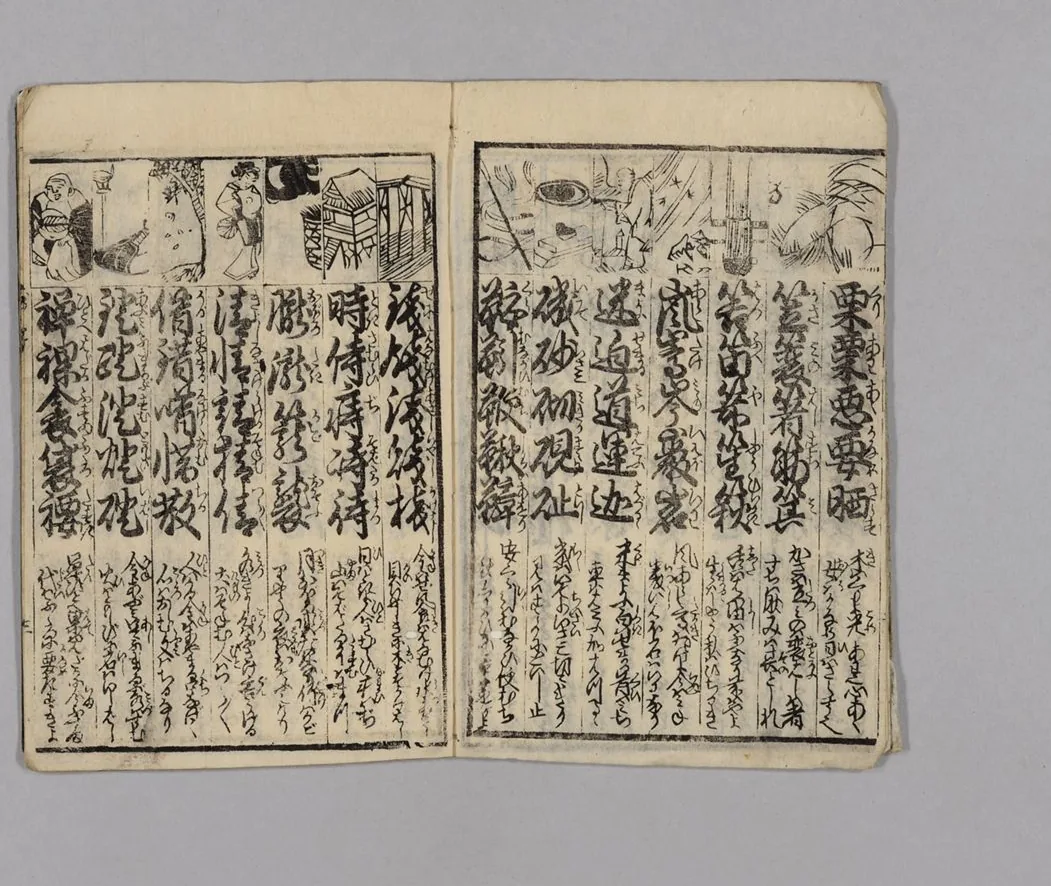
第16条は、小学校教育において1音につき1つの仮名字形を定め、近世以前に存在した多様な変体仮名を、現在の標準的な平仮名にほぼ相当する形へ整理しました。また、漢字の音読みを仮名で表記する際の基準を設け、漢字は広く用いられるものに数を減らすよう求めました。ただし、条文は漢字の使用数に数値上の上限を設けていません。この省令自体はすでに失効していますが、そこで定着した仮名の体系は現在も使われています。
見解が分かれる点 広く流布した説明では、この改革に漢字1,200字という上限が結び付けられ、根拠が「文部省令第24号」とされます。しかし、今回確認した出典は両方を否定します。国立国会図書館の法令索引では第14号であり、第16条の転記全文には数値による上限がありません。1,200字という数字は、単に未確認なのではなく誤りとして扱うべきです。後にこの省令を正式に廃止した文書は特定できなかったため、廃止日は示しません。
公的な二次資料 出典2件
戦後の制度確立
1945年からの約12年間に、この地域のすべての国家が自国の文字表記について制度上の措置を取りました。しかも用いた文書の種類はそれぞれ異なり、その違いが後の制度の持続性を説明する要因となります。
1946年11月16日 公布日
当用漢字表
Tōyō kanji hyō
当用漢字表
内閣告示 · 内閣(日本) 内閣 内閣告示第32号
1,850字です。前書きは、この表が「法令、公用文書、新聞、雑誌及び一般社会で使用する漢字の範囲を示したもの」であり、この範囲の漢字で書けない語は別の語に言い換えるか仮名書きにすると述べています。1946年11月5日の閣議決定で、その提出が承認されました。
公的な二次資料 出典2件
1946年11月16日 公布日
現代かなづかい
Gendai kanazukai
現代かなづかい
内閣告示 · 内閣(日本) 内閣 内閣告示第33号
漢字表と同じ日に告示されましたが、変更の規模はこちらのほうが大きいものでした。口語文を対象に、仮名のつづりを歴史的仮名遣いから現代の発音に基づく表記へ移し、古典は対象外としました。「ゐ」「ゑ」は「い」「え」に、「くわ」「ぐわ」は「か」「が」に改め、助詞以外の「を」は「お」とし、「ぢ」「づ」は複合語などの例外を除き「じ」「ず」としました。「は」「へ」は助詞のときだけ歴史的なつづりを保ちます。1986年には内閣告示第1号「現代仮名遣い」に置き換えられました。
公的な二次資料 出典2件
1948年10月9日 公布日
한글전용에관한법률
Hangeul jeonyong-e gwanhan beomnyul
ハングル専用に関する法律(한글 전용에 관한 법률)
法律 · 大韓民国国会 대한민국 국회 법률 제6호
実質的な規定は1文で、ハングルの日に合わせた公布日に施行されました。「大韓民国の公文書はハングルで書く。ただし、当分の間、必要に応じて漢字を併用することができる」という内容です。新共和国が文字表記について定めた最初の法律であり、共和国成立後の最初期に制定された法律の一つでもあります。2005年の「国語基本法」制定に伴い廃止されました。
見解が分かれる点 この法律はしばしば漢字の禁止として説明されますが、条文はその逆で、ただし書きが漢字の併用を明示的に認めています。「公文書」「当分の間」「必要に応じて」のいずれも定義せず、罰則も執行の仕組みも設けていません。そのため韓国の法学研究では、実効的な禁止規定ではなく、言語的独立を宣言する規定と捉えられています。
一次資料 出典2件 · 一次資料1件
1956年1月28日 可決日 施行日:1956年2月1日
汉字简化方案
Hànzì jiǎnhuà fāng’àn
漢字簡化方案(汉字简化方案)
国務院決議 · 中華人民共和国国務院 国务院
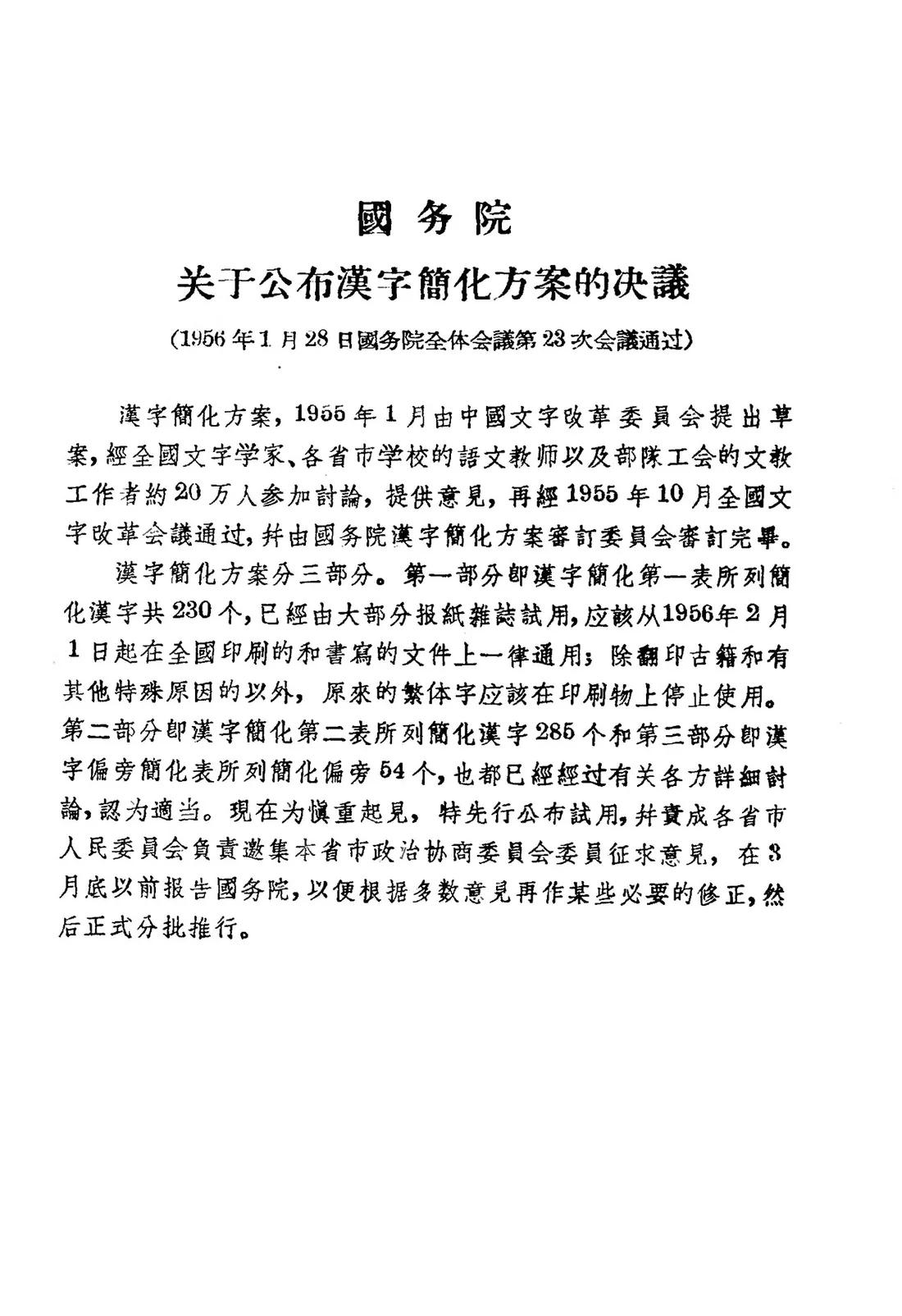
国務院第23回全体会議で可決されました。第1表の230字は1956年2月1日から印刷物で使用が義務付けられました。第2表の285字と簡化偏旁54個の表は試用のために公表されました。決議は古典の復刻を除き、繁体字を「印刷物での使用を停止すべき」と定めています。
見解が分かれる点 この方案に「異体字1,055字の廃止」という数値が結び付けられることがあります。しかし、それは1955年12月の別文書「第一批异体字整理表」によるものであり、ここには含めていません。
一次資料 出典2件 · 一次資料1件
1958年2月11日 承認日
汉语拼音方案
Hànyǔ pīnyīn fāng’àn
漢語拼音方案(原題:汉语拼音方案)
全国人民代表大会決議 · 全国人民代表大会 全国人民代表大会
第1期全国人民代表大会第5回会議で承認されました。決議はピンインを「漢字学習を支援し、普通話を普及させるための道具」として採用し、まず師範学校と小・中学校で教え、出版分野へ徐々に広げるよう指示しています。
見解が分かれる点 ピンインは漢字の代替として構想されたと広く言われます。しかし1958年の決議はそう述べておらず、補助的な道具として採用しています。周恩来による1958年1月10日の別の報告は、ピンインが「漢字に代わる表音文字ではない」と明言しますが、それは決議本文ではなく、決議が原則として承認した別文書です。文字改革委員会の内部には長期的なローマ字化を目指す動きが確かにありました。しかし、この文書が制定した内容はそれではありません。一般的な説明は創作というよりも、別の主張を決議に誤って帰属させたものです。全人代自身が公開する決議はTLSハンドシェイク時に接続が失敗して取得できなかったため、文言は一致する複数の転載に依拠しています。
公的な二次資料 出典2件 · 一次資料1件
異なる道筋
中国本土と台湾は測定可能なほど異なる漢字の字体を標準とし、韓国は学校教育から漢字を排除した後に復活させました。一方、行き過ぎた改革の一つは撤回されました。
1964年5月 公表日
简化字总表
Jiǎnhuàzì zǒngbiǎo
簡化字総表(简化字总表)
文字改革委員会が発表した標準字表 · 中国文字改革委員会 中国文字改革委员会
1956年の方案を3表に統合しました。第1表は構成要素として用いない352字、第2表は構成要素に使える132字と簡化偏旁14個、第3表はそれらから類推して簡化した1,754字です。国務院の文書ではなく文字改革機関の刊行物であるため、基になった1956年の決議とは法的な位置付けが異なります。
見解が分かれる点 各表の内訳を足すと2,238字になります。二次資料のほぼすべては2,236字とし、2字の重複掲載で説明しています。しかし表の脚注は1,754字という数字がすでに重複を除いた値だと記しており、2,236字を説明するために挙げられる2字は、その脚注が示す組み合わせでもありません。1964年の官報はオンラインで閲覧できません。ここではどちらの数値も確定させません。
公的な二次資料 出典1件
1968年10月25日 発表日
한글전용 촉진 7개 사항
Hangeul jeonyong chokjin 7-gae sahang
ハングル専用促進7項目(한글 전용 촉진 7개 항목)
大統領指示 · 大韓民国大統領 대통령
学校教育と行政から漢字をなくす目標年を1973年から1970年に前倒しし、教科書から漢字を除くことと1948年の法律を改正することを指示しました。さらに1969年9月の教育課程に関する省令が漢字指導の法的根拠を撤廃し、1970年3月には小学校の国語教科書がハングル専用に戻りました。
見解が分かれる点 この変更は一般に「1970年3月1日の大統領特別指示」によるとされます。しかし、韓国国家記録院自身の年表で1970年3月は、上記1968~69年の一連の措置を受けて教科書が変わった時期としてのみ示されています。別個の1970年の指示は見つかっていません。
公的な二次資料 出典1件
1972年8月16日 発表日
한문교육용 기초한자 1800자
Hanmun gyoyuk-yong gicho hanja 1800-ja
漢文教育用基礎漢字1,800字(한문 교육용 기초 한자 1,800자)
文教部告示 · 文部省 문교부
学校教育用に1,800字を定め、中学校用900字と高校用900字に分けました。その前提として1972年8月の教育法施行令改正により漢字教育の法的根拠が復活し、翌月から授業が再開されました。この1,800字の組は長く使われ、現在も学校の漢字教育の基準です。
見解が分かれる点 「1972年の方針転換」と呼ばれますが、1972年の文書は施行令の改正とこの字表に限られます。漢文を独立した必修科目とした拘束力のある教育課程省令は、それより後のものです。中学校は1973年8月31日の文教部令第325号、高校は1974年12月31日の第350号です。この発表に関する文教部の記録ページは読み込めず、日付と字数は国家記録院の年表および検索結果のメタデータに依拠しています。
公的な二次資料 出典2件
1973年6月18日 公布日
送り仮名の付け方
Okurigana no tsukekata
送り仮名の付け方
内閣告示 · 内閣(日本) 内閣 昭和48年内閣告示第2号
通則7項目を原則と例外の形で定め、慣用的な語形の付表も設けています。前書きでは、一般の社会生活における通常の表記の「よりどころ」であると位置付け、専門用語・特殊な用語や固有名詞を明示的に対象外とします。この年表の中でも、内閣告示が義務命令ではなく表記の参考基準であることを最も明確に示す文書です。1981年10月1日に、新しい常用漢字表に合わせて改定されました。
見解が分かれる点 法令の起案には、これとは別に内閣法制局の、より限定的な運用基準が適用されます。二次資料では両者がしばしば混同されます。1981年の改定に関する告示番号は確認できなかったため、記載していません。
一次資料 出典2件 · 一次資料1件
1977年12月20日 公表日
第二次汉字简化方案(草案)
Dì-èr cì hànzì jiǎnhuà fāng’àn (cǎo’àn)
『第二次漢字簡化方案(草案)』(原題:『第二次汉字简化方案(草案)』)
文字改革委員会による試用向け草案 · 中国文字改革委員会 中国文字改革委员会
草案は1977年12月20日の『人民日報』に掲載されました。第1表は類推による55字を含む248の簡化字形を掲げ、出版物での試用を認めました。第2表の605字は広く意見を求めるためのものでした。教育当局は1978年4月に教科書での試用を停止し、宣伝部門は同年7月に新聞・書籍・定期刊行物での試用を停止しました。1986年6月24日付の国務院通知「国発〔1986〕64号」により草案は正式に撤回されました。
見解が分かれる点 第1表は出版物での試用を認められましたが、どちらの表も、それまでの正式な漢字表を確定的に置き換えたわけではありません。この経緯は、当時の草案と後の国務院通知によって裏付けられています。
公的な二次資料 出典2件 · 一次資料1件
1981年10月1日 公布日
常用漢字表
Jōyō kanji hyō
常用漢字表
内閣告示 · 内閣(日本) 内閣 昭和56年内閣告示第1号
1,945字で、1946年の1,850字を置き換えただけでなく、漢字表自体の性格も変えました。1946年の表は、範囲外の漢字を使う語の書き換えを求めていましたが、この表は「目安」と位置付けています。制限は推奨へと変わったのです。
見解が分かれる点 この表については2つの日付が流布していますが、告示の日付は1つです。国語審議会は1981年3月23日に答申し、内閣は同年10月1日に告示しました。年表によって先に目にした日付が採られてしまっています。また、「95字追加、削除なし」という一般的な内訳は確認できませんでした。表示できなかった文部省関連ページに遡る数値です。一方、総数1,945字と告示番号は文化庁自身のサイトで確認できます。
一次資料 出典1件 · 一次資料1件
1982年9月1日 発表日
常用國字標準字體表
Chángyòng guózì biāozhǔn zìtǐ biǎo
常用国字標準字体表(常用國字標準字體表)
教育部公告 · 中華民国教育部(台湾) 教育部
常用する漢字4,808字の標準字体を確定しました。台湾は、この文書によって漢字を簡化するのではなく、伝統的な字体を標準化しました。中国本土が簡化によって解決した問題に対し、台湾は受け継がれた複数の字体のうちどれを正しい字体とするかを定めたのです。同じ時期に使用頻度の低い漢字の関連字表も公布されました。
見解が分かれる点 関連字表の字数が違うのは資料間の矛盾ではなく改訂のためです。1982年公布時は6,341字、1993年の楷書改訂では6,343字、2017年の異体字改訂後は6,329字でした。1つの表の3つの版です。1982年の公告に付された教育部の文書番号は確認できなかったため、示していません。
一次資料 出典2件 · 一次資料2件
標準化
改革は基準の統合へと移り、従来の字表の置き換え、統合された漢字の再分離、用例だけでなく行政告示によって定められたローマ字表記が中心となりました。
1986年6月24日 公布日
国务院批转国家语言文字工作委员会关于废止《第二次汉字简化方案(草案)》的通知
Guówùyuàn pīzhuǎn … fèizhǐ … de tōngzhī
「第二次漢字簡化方案(草案)」の廃止申請を伝達する国務院通知(国発〔1986〕64号)
国務院通知 · 中華人民共和国国務院 国务院
この通知の日から1977年草案の使用を終了させました。草案の公表から9年、実際の試用停止から8年後のことです。1986年10月10日付の改訂版「簡化字総表」では、異体字として同一視されていた4字(叠、覆、像、囉)の統合を解き、第1表を352字から350字に、類推による簡化字の表を1,754字から1,753字に変更しました。
見解が分かれる点 改訂後の内訳を合計すると2,235字です。二次資料では「2,274字と偏旁14個」という記述が繰り返されますが、表自身に示された内訳をどう組み合わせても一致しません。2,235字は計算上の合計である一方、2,274字の出所は追跡できませんでした。そのため後者を棄却せず、報告された数値として示しています。
公的な二次資料 出典2件 · 一次資料1件
2000年7月7日 公布日
국어의 로마자 표기법
Gugeo-ui romaja pyogibeop
国語のローマ字表記法(국어의 로마자 표기법)
行政告示 · 文化観光部 문화관광부 문화관광부 고시 제2000-8호
キーボード入力に不向きな補助記号を廃止しました。ブレーヴ記号をなくし、ㅓは「ŏ」でなく「eo」、ㅡは「ŭ」でなく「eu」と表し、帯気音を示すアポストロフィーも除きました。この年表の中で、コンピューター入力の問題を明示的な背景とする唯一の文書です。韓国の地名が空港や道路標識で現在のように綴られる理由でもあります。
見解が分かれる点 置き換えたのは、韓国政府が1984年に定めた基準(文教部告示第84-1号)です。これはマッキューン=ライシャワー式を修正したもので、1939年制定の学術的なマッキューン=ライシャワー式そのものを廃止したのではありません。1939年の方式は今も学術的に使われており、そもそも韓国政府が廃止できる制度ではありません。さらに2014年12月5日の告示第2014-42号で改正され、現行版となっています。
一次資料 出典1件 · 一次資料1件
2010年11月30日 公布日
常用漢字表
Jōyō kanji hyō
常用漢字表(改定)
内閣告示 · 内閣(日本) 内閣 平成22年内閣告示第2号
2,136字です。厳密には1981年の告示を修正したのではなく、新たな告示によって旧告示に代えたものです。文化審議会は2010年6月7日に答申し、内閣は11月30日に告示しました。日本語の文章の大部分が手書きではなく入力される時代になったことが、初めて改定内容に大きく影響しました。読めても手では書けない人が多い字も、その理由によって採用されました。
見解が分かれる点 説明は2通りあり、どちらも正しいものです。196字追加・5字削除(勺、錘、銑、脹、匁の5字は完全に除外されたのではなく人名用漢字に移された)という説明と、差し引き191字増という説明です。1,945+196-5=2,136=1,945+191です。片方だけを示すことが、両者を矛盾して見せています。追加・削除の内訳は表示できなかった文部科学省のPDFによりますが、総数2,136字、日付、告示番号は発出機関自身のページで確認できます。
一次資料 出典2件 · 一次資料2件
2013年6月5日 承認日 施行日:2013年8月19日
通用规范汉字表
Tōngyòng guīfàn hànzì biǎo
通用規範漢字表(通用规范汉字表)
国務院通知 · 中華人民共和国国務院 国务院 国发〔2013〕23号
合計8,105字を3級に分類しています。一般的な読み書き用の3,500字、使用頻度に基づき追加された3,000字、姓・地名・科学技術用語・教科書の古典に使う1,605字です。通知は一般の文字使用をこの字表に従わせ、従来の関連字表は使用を停止するよう求めています。2013年8月19日に一般公開されました。現在有効な文書です。
見解が分かれる点 通知は旧基準の置き換えを一般的に述べていますが、1986年の「簡化字総表」を題名で名指ししているかは確認できませんでした。字表が抽出可能なテキストではなく画像で公表されているためです。そこで本稿では、廃止を明示的なものではなく黙示的なものとして記録しています。
一次資料 出典2件 · 一次資料2件
記載あり、未検証
確認できない項目も省略せず掲載しています。公的文書の年表にとって、引用できる文書が見つからないこと自体が調査結果です。項目を省けば、その事実が見えなくなります。
1949年3月 記録日
北朝鮮:該当する公的文書は未発見
北朝鮮が漢字の使用を廃止したのは一般に1949年3月とされ、東アジアの国家が行った文字改革のうち最も徹底した変更でした。しかし、その日付を裏付ける公的文書は見つかっていません。閣議決定、最高人民会議の立法、名称を特定できる指令のいずれも確認できませんでした。この日付の根拠は結果を説明する韓国の学術百科事典ですが、北朝鮮の文書を引用していません。
確認を保留する理由 この項目は未検証として他と分けて掲載しています。根拠文書がないこと自体が調査結果だからです。近い時期には、朝鮮語研究会が発した1948年の「朝鮮語新綴字法」という日付の確認できる北朝鮮の文書があります。しかし、これは正書法の改革であって漢字廃止ではありません。両者を結び付けてしまうことは、本誌が意図して避けている根拠のない推論になります。
報道などによる情報 出典1件
この年表の読み方
どの日付か。こうした文書には、勧告日、可決日、公布日、施行日など、2~3の日付が付くことが珍しくなく、数か月ずれる場合もあります。公刊された年表は、とりわけこの区別を誤りがちです。各項目では年表上に置いた日付の性質を明示し、実際の施行日が別にあればそれも示します。
どの暦か。韓国における1896年のグレゴリオ暦採用より前の3項目は太陰太陽暦による日付として示しています。甲午改革期の勅令を無条件に「1894年11月21日」と記す資料は、旧暦の日付を新暦の日付のように表記しています。ここでは新暦への換算日を断定しません。
争点のある数値は掲載し、決着したことにはしません。19件の項目には、出典間で一致しない数値や、広く伝わる説明が文書原文と異なる場合の注記があります。うち2件では表内の数値を足した結果が二次資料に繰り返される合計と一致せず、当時の官報の原本もオンラインでは確認できません。計算の合う数値だけを正解として示すのは、本誌がまだ裏付けられていない決着を断定することになります。
出典の区分。出典ごとに、文書原本または発出機関による資料、別の政府機関・公文書館・法令索引による資料または逐語転記、報道・学術文献という区分を付けています。項目全体は、引用可能な最良の資料ではなく、実際に論拠として依拠する資料のうち最も弱い区分で評価します。逐語的な転記も、原文を正確に再現していても発出機関自身の公表物ではないため、公的な二次資料に分類します。